
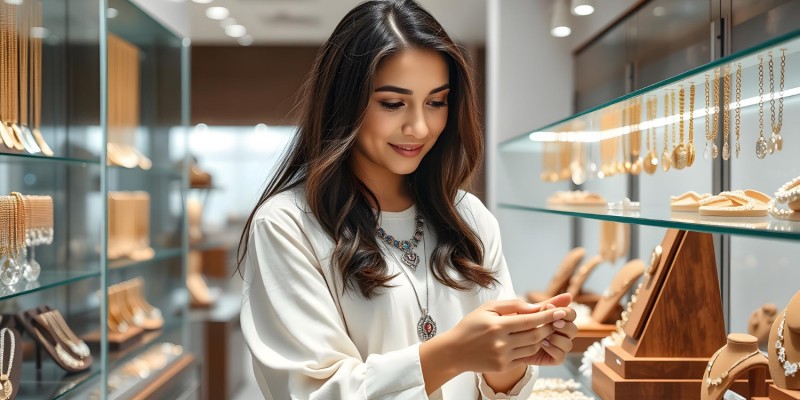
Latest Jewellery Trends in Bengaluru: What Shoppers in Sadashivanagar Are Choosing in 2026
Walk through Sadashivanagar on any given Saturday and you notice something. The jewellery conversations happening in showrooms are different from what they were even three years ago. People are not just asking “what is this worth?” They are asking “can I wear this to the office on Tuesday and to a wedding on Saturday?” They are asking about rose gold versus yellow gold. They are asking whether a layered chain look will work with a saree. They are not buying for the locker anymore. They are buying to wear.
That shift tells you something real about where jewellery culture is heading in Bengaluru in 2026. The city has always been a blend of tradition and the contemporary, old Kannada families alongside software professionals and startup founders, and the jewellery choices coming out of neighbourhoods like Sadashivanagar reflect exactly that mix. This is not a city that wants to choose between heritage and modernity. It wants both, ideally in the same piece.
This guide covers the jewellery trends that are actually moving in Bengaluru right now, across gold, diamonds, design styles, and buying behaviour, with practical notes on how to wear them and what to look for when you are shopping.
The most interesting thing about jewellery in 2026 is not the individual trends. It is the underlying shift: buyers want pieces that work across contexts, hold their value, and actually mean something to them personally.
Why 2026 Is a Different Kind of Year for Jewellery Shoppers in Bengaluru
A few things have converged to make 2026 a genuinely interesting moment for jewellery in Bengaluru specifically.
Gold prices are near historic highs, hovering around Rs 90,000 per 10 grams through much of early 2025 and remaining elevated into 2026. That changes buying behaviour in a meaningful way. When gold is expensive, people stop buying heavy pieces they will only wear twice a year. They start buying lighter, more wearable pieces they will actually use.
They start asking whether the design is worth the making charges. They become better, more intentional buyers.
At the same time, Bengaluru’s professional population has grown considerably. The city now has a large cohort of women in their late twenties to mid-forties with disposable income and strong personal style opinions. This group is not buying jewellery the way their mothers did, as investment assets stored in bank lockers. They are building jewellery wardrobes the way they build clothing wardrobes: intentionally, incrementally, with specific pieces for specific contexts.
The result is a jewellery market that is more style-driven and more sophisticated than it has been in previous cycles. The trends below reflect that.
Trend 1: Lightweight Neo-Heritage Gold
This is probably the dominant trend in Bengaluru right now, and it maps directly onto the price environment. Neo-heritage is the term for traditional Indian designs, temple motifs, Lakshmi pendants, peacock patterns, mango shapes, reimagined in lighter-weight gold that is practical to wear daily.
The craftsmanship is still there. The cultural references are still there. But the piece weighs 6 grams instead of 18. Advances in manufacturing, specifically electroforming and hollow casting techniques, allow jewellers to create pieces that look voluminous and traditional but feel surprisingly light on the body. A necklace that would have weighed 25 grams fifteen years ago can now be produced at 10 to 12 grams with essentially the same visual impact.
What This Looks Like in Practice
Lightweight Lakshmi coin pendants on fine rope chains. Hollow gold jimikki earrings that read as traditional but are comfortable for six-hour wear. Detachable long necklaces that convert to chokers, giving one piece two completely different looks. Antique-finish gold with matte surfaces rather than high polish, which reads as more understated and suits both office and evening contexts.
The 22 karat versus 18 karat question comes up here. Most traditional motifs are produced in 22 karat for cultural and investment reasons, and buyers in Sadashivanagar tend to prefer it for pieces they intend to hold for years. For lighter daily-wear pieces, 18 karat gives more design flexibility and durability, and is the more practical choice for the workplace.
Who This Trend Suits
Anyone who loves traditional Indian gold jewellery but finds heavy pieces impractical. Working professionals who want gold that reads as culturally Indian but does not look like pure festival wear. Buyers who want the investment value of real 22 karat gold without the discomfort of heavy traditional pieces.
Trend 2: Diamond Jewellery for Everyday, Not Just Occasions
Diamonds in India used to be reserved for weddings and significant occasions. That is changing faster than most people in the traditional jewellery trade expected. The shift has several drivers.
Certified diamonds are now more accessible at multiple price points than they were a decade ago. A well-chosen solitaire pendant or a pair of small diamond studs in 18 karat gold can be bought for Rs 25,000 to Rs 50,000 from a reputable store with proper certification. That is within reach for the professional demographic that makes up a significant portion of Sadashivanagar’s buying population.
Additionally, the definition of “occasion” has broadened. A product launch, a client dinner, a friend’s engagement party: these are occasions that call for something more than plain gold but less than full bridal diamonds. A simple diamond pendant or a small diamond ring fills that gap perfectly.
What Buyers in Bengaluru Are Choosing
Solitaire pendants in bezel settings, where the diamond is surrounded by a ring of gold rather than held by prongs. This setting style is more secure for daily wear and has a cleaner, more modern appearance. Diamond stud earrings remain a perennial choice, but buyers are now looking at slightly larger stones, 0.15 to 0.25 carats per ear, rather than the very small stones that were standard ten years ago.
Diamond rings have also moved beyond engagement contexts. Stack rings with small diamonds, bands with a row of pavé-set stones, and geometric rings with a single accent diamond are all selling well as self-purchase items, not just gifting.
The Certification Conversation
The most important thing to understand about buying diamond jewellery from any jewellery store in Bangalore is the certification question. A diamond without a GIA or IGI grading certificate cannot be verified for cut, colour, clarity, and carat weight. Any reputable store will provide certification as standard. If a store cannot or will not provide certification, that is sufficient reason to buy elsewhere.
At Sri Ganesh Diamonds & Jewellery in Sadashivanagar, every diamond piece comes with a grading certificate. The team can walk you through what the certificate means and how to read the specifications, which is genuinely useful for first-time diamond buyers.
Trend 3: The Stack and Layer Aesthetic
This trend has been building globally for several years and has now fully arrived in Bengaluru. The layered look, multiple chains at different lengths with different pendants, multiple rings on the same hand, stacked bangles mixing textures, is everywhere in the city’s style-conscious demographic.
What makes this interesting from a buying perspective is that it changes how people shop. Instead of one significant purchase, buyers are making multiple smaller purchases that work together. A thin 18 karat gold chain at 16 inches. A slightly thicker chain at 18 inches with a small pendant. A longer chain at 20 inches, perhaps with a coin or a disc. Three purchases, each individually modest, that together create a curated look.
The Bengaluru Version of Layering
Bengaluru buyers tend to layer within the same metal family rather than mixing metals aggressively, which reflects a slightly more conservative aesthetic than what you see in Delhi or Mumbai. Yellow gold layers with yellow gold. Rose gold pieces are worn together. White gold and platinum are kept separate from yellow gold rather than combined.
The exception is intentional contrast: a traditional 22 karat gold coin pendant on a fine 18 karat chain, where the slightly different tones are deliberate rather than accidental. This looks intentional and works well.
For Rings
Ring stacking has arrived. Thin bands, signet rings, rings with small stones, all on the same hand or across both hands. The key rule that most buyers figure out quickly: keep the thumb and index finger clear for functionality, and concentrate the stack on the middle, ring, and little fingers. One bold ring and two or three thin bands on the same hand tends to work better than five bands of the same width.
Trend 4: Antique and Oxidised Finishes
The matte, aged look of antique-finish gold jewellery has moved from a niche preference to a mainstream one in Bengaluru. This finish, achieved through oxidisation and surface treatments that give gold a darker, slightly textured appearance, suits traditional Indian clothing particularly well and photographs beautifully.
The appeal is partly aesthetic and partly practical. Antique-finish pieces do not show fingerprints and minor scratches the way high-polish gold does. They look rich and handcrafted rather than mass-produced. And they sit comfortably alongside both traditional silk sarees and contemporary clothing in a way that very shiny gold sometimes does not.
Popular Antique-Finish Pieces Right Now
Antique-finish temple pendants with kempu (glass stone) settings in deep red and green. Oxidised coin necklaces. Antique Lakshmi harams that convert between long and short lengths. Large antique jhumka earrings with intricate surface texture. These pieces are in strong demand from Bengaluru’s traditional buyer base, particularly around festival seasons.
The craftsmanship requirement for antique-finish pieces is higher than for plain polished gold. The surface texture must be consistent and the oxidisation must be even. This is an area where the difference between a well-made piece and a mediocre one is immediately visible. Buyers should examine antique-finish pieces closely under good lighting before purchasing.
Trend 5: Coloured Gemstones Are Back
For about a decade, white diamonds dominated the fine jewellery conversation. Everything else felt secondary. That is changing in 2026, and the change is being driven by both aesthetics and economics.
Coloured gemstones, rubies, emeralds, sapphires, and semi-precious stones like amethyst and citrine, bring a visual energy to jewellery that white diamonds do not. A deep green emerald ring makes a statement. A sapphire pendant in a yellow gold setting has a warmth and presence that is hard to achieve with a white stone. And for buyers who want something striking without spending what a high-quality white diamond costs, coloured stones offer genuine value.
The Astrological Dimension
In Bengaluru’s traditional buyer segment, gemstone choices are often influenced by astrological recommendations. Yellow sapphires, blue sapphires, rubies, emeralds, and coral all have specific astrological associations in Vedic tradition. This means that gemstone buying is not always a purely aesthetic decision. A buyer may come in looking specifically for a yellow sapphire ring set in gold for astrological reasons, and want quality and certification for the stone.
Sri Ganesh Diamonds & Jewellery carries coloured gemstone pieces including ruby, emerald, and sapphire settings, and can advise on stone quality for buyers with specific requirements. Gemstone quality certificates from reputable labs are available for significant coloured stone purchases.
Contemporary Coloured Stone Choices
For the style-driven buyer rather than the astrological buyer, the trending coloured stones in 2026 include: tourmaline in pink and green, which pairs beautifully with rose and yellow gold; morganite, a peach-pink stone that has become popular for rings and pendants; and tanzanite, a violet-blue stone with a distinctive depth of colour. These are not traditional Indian gemstones, but they are increasingly being set in gold by Indian jewellers for buyers who want colour with a more contemporary feel.
Trend 6: Statement Earrings That Work Across Contexts
Earrings are the most purchased jewellery category in India, and in 2026 the trend is towards statement pieces that are bolder than classic studs but lighter and more wearable than full traditional jhumkas.
Structured hoops in 22 karat yellow gold. Large geometric drop earrings in 18 karat. Chandbali-inspired designs that reference traditional forms but in lighter weight. These pieces work with a range of outfits because they carry enough visual weight to be a focal point without requiring the entire outfit to be traditionally Indian.
The Jhumka Reimagined
The classic jhumka, the South Indian bell earring with a dome top and hanging bell, is one of the most recognisable Indian jewellery forms. In 2026, it is being reimagined rather than abandoned. The proportions are changing: smaller domes, longer more slender drops, lighter weight through hollow construction. The surface treatment is changing: antique finish, enamelling in contemporary colours. The attachment is changing: some jhumka designs now sit on a huggie-hoop base, which is more secure and comfortable than a traditional push-back post for larger earrings.
These modernised jhumka designs are particularly popular with Bengaluru’s professional women who grew up wearing traditional jewellery and want pieces that reference that heritage without feeling like pure festival wear in an office context.
Ear Cuffs and Ear Climbers
A newer category that is gaining traction in Bengaluru’s younger buying demographic: ear cuffs and climbers that sit along the curve of the ear without a piercing, or that use a single piercing to create a dramatic upward effect. These pieces work in yellow and white gold, often with small diamond accents. They suit a very different customer from the traditional jhumka buyer, but they represent real demand in the 22 to 35 age group.
Trend 7: Custom and Personalised Jewellery
Personalisation has moved from a niche category to a mainstream expectation in fine jewellery. Buyers in Bengaluru are increasingly interested in pieces that have specific meaning: initials, significant dates, coordinates of a meaningful location, a deity worked in a particular style at the buyer’s request, a family heirloom redesigned into a contemporary form using the original gold.
This trend reflects something broader about how people think about jewellery in 2026. It is not enough for a piece to be beautiful in a general sense. It should be specifically meaningful to the person wearing it. The experience of having something made for you or for someone you love is part of the value, not just the finished object.
Custom Work at Sri Ganesh Diamonds & Jewellery
Custom jewellery orders are a significant part of the work at Sri Ganesh Diamonds & Jewellery in Sadashivanagar. Customers bring reference images, describe concepts, or ask the design team to interpret a brief. The consultation process involves reviewing design options and making adjustments before the gold is worked. Most custom pieces are completed within seven to fourteen days depending on complexity.
Heirloom redesign is a specific type of custom work the store handles regularly. A set of heavy traditional bangles becomes a set of stackable modern bangles using the same gold. A grandmother’s necklace is melted down and remade as a lighter piece the next generation will actually wear. This kind of work requires trust in the jeweller and transparency about the gold weight through the process. The store documents the weight at intake and at each stage, which buyers find reassuring.
2026 Jewellery Trends at a Glance: A Quick Reference Guide
Here is how the main trends map onto different buyer types and occasions:
| Trend | Best Suited For | Key Piece to Consider |
|---|---|---|
| Lightweight Neo-Heritage Gold | Traditional buyers wanting daily-wear pieces | Hollow jimikki or antique pendant |
| Everyday Diamond Jewellery | Professionals buying for office-to-evening wear | Bezel-set solitaire pendant or stud earrings |
| Stack and Layer Look | Style-conscious buyers building a jewellery wardrobe | Mix of fine chains at staggered lengths |
| Antique and Oxidised Finish | Buyers of traditional Indian ethnic wear | Antique Lakshmi haram or kempu jhumka |
| Coloured Gemstones | Buyers wanting colour, astrological buyers | Ruby or emerald ring in 22K gold setting |
| Statement Earrings | Anyone wanting one strong focal point per look | Modernised jhumka or structured gold hoop |
| Custom and Personalised | Gift buyers, heirloom redesign, personal meaning | Initial pendant, custom engagement ring |
The trends above are not mutually exclusive. A layered necklace look can incorporate a neo-heritage pendant alongside a modern geometric chain. An antique-finish piece can sit alongside a contemporary diamond ring. The Bengaluru buyer in 2026 is comfortable with combinations that would have seemed unusual in more conservative buying cycles.
What the Sadashivanagar Buyer Looks Like in 2026
This neighbourhood is specific enough that it is worth being direct about the buying profile. Sadashivanagar has a mix of long-established Kannada families, senior corporate professionals, and a smaller cohort of younger working adults who have moved into the area. These groups do not buy the same way.
The Traditional Established Buyer
This buyer has a clear framework for jewellery. Gold is investment and heritage. Heavy pieces are stored in bank lockers and brought out for weddings. Festival purchases happen at Dhanteras and Akshaya Tritiya because those are auspicious times. This buyer is not particularly influenced by trends but is very influenced by hallmarking, purity certification, and the reputation of the jeweller.
What is changing for this segment in 2026: the interest in lightweight gold that can be worn more frequently. Even buyers with a traditional investment mindset are noticing that a 10 gram piece worn regularly accumulates more enjoyment per rupee than a 25 gram piece worn twice a year.
The Professional Contemporary Buyer
This buyer has a professional income, a corporate wardrobe, and a specific problem: very little of the jewellery available in traditional Indian jewellery Stores in Bangalore works well in a business context without looking overdressed. This buyer gravitates towards 18 karat gold in contemporary designs, diamond pieces in simple settings, and the layered chain look.
The trend that has most directly shifted buying behaviour for this segment: the everyday diamond. A certified solitaire pendant or a pair of small diamond studs works in a business meeting and at a dinner party. It does not look like festival jewellery. And it holds real value unlike costume jewellery or gold-plated pieces.
The Younger Self-Purchase Buyer
In their late twenties to mid-thirties, buying for themselves rather than for investment. This group is the primary driver of the layered look, the custom piece, and the coloured gemstone trend. They are comfortable with smaller individual purchases that build a collection over time, and they are the segment most likely to be influenced by what they see on social media and in the wardrobes of people they admire.
Gifting is also significant for this group: a meaningful piece for a friend’s milestone, a custom ring for an engagement, an antique pendant for a mother. These purchases are emotionally driven and tend to have higher engagement with the jeweller during the buying process.
How to Shop the 2026 Trends: Practical Advice
Start with the Occasion Map
Before walking into any jewellery store in Bangalore, be clear on where the piece will be worn and how often. Daily office wear requires different choices than festival wear, which requires different choices than gifting. This one question eliminates half the confusion that most buyers experience in store.
Know Your Karat Before You Walk In
22 karat is for investment, traditional pieces, and pieces with deep cultural significance. 18 karat is for contemporary designs, daily wear, and pieces with gemstones that require structural precision. If you are unsure, ask to see the same design in both karats. The visual difference and the price difference will make the decision obvious.
Ask About Making Charges Separately
Making charges on jewellery can range from 8% to 25% of the gold value depending on design complexity. Always ask for making charges as a separate line item. A piece with very high making charges has lower resale efficiency, which matters if you think of jewellery as part of your overall wealth. For purely aesthetic purchases, making charges are less critical, but you should still know what you are paying for.
For Diamonds, Always Verify Certification
GIA and IGI certificates are the standard for the Indian market. The certificate should specify cut, colour, clarity, and carat weight. A diamond without a certificate from a recognised grading laboratory cannot be assessed for quality. This applies whether you are spending Rs 20,000 or Rs 2 lakh on a diamond piece.
Give Custom Orders Enough Lead Time
Custom pieces require a consultation, design review, and manufacturing time. For a significant custom piece like an engagement ring or a redesigned heirloom, allow two to three weeks minimum. For simpler custom work like an initial pendant or a personalised chain, a week to ten days is usually sufficient. Call ahead to schedule a consultation if you have a specific brief.
Frequently Asked Questions
What jewellery trends are most popular in Bengaluru in 2026?
The strongest and latest jewellery trends in Bengaluru right now are lightweight neo-heritage gold, everyday diamond jewellery for professional wear, the layered chain aesthetic, antique-finish pieces, and custom personalised jewellery. Coloured gemstones are also gaining ground, both for aesthetic and astrological reasons.
Is it a good time to buy gold jewellery given current prices?
Gold prices are elevated compared to historical levels, which makes heavy traditional pieces more expensive. However, this is also encouraging buyers towards lighter, more wearable designs that give better value per gram. For investment-focused buyers, the conventional wisdom of systematic purchase, buying a fixed amount across multiple occasions rather than one large purchase, still applies and smooths out price timing risk.
What is the difference between antique-finish and plain gold jewellery?
Antique-finish gold undergoes a surface treatment, usually oxidisation, that gives it a darker, matte appearance that resembles aged gold. This finish suits traditional Indian designs and ethnic clothing particularly well. Plain polished gold has a high shine. The gold content and purity are the same for both finishes. The choice is purely aesthetic.
How do I know if a diamond piece is worth the price?
The certificate is the primary verification tool. A GIA or IGI grading certificate gives you an independent assessment of cut, colour, clarity, and carat weight. Beyond certification, examine the setting quality: prongs should be even and secure, the stone should not move in the setting, and the overall finish should be clean. If a store cannot produce a certificate, the piece is not worth buying at fine jewellery prices.
Can I redesign old jewellery at Sri Ganesh Diamonds and Jewellery?
Yes, heirloom redesign is a regular service at Sri Ganesh Diamonds & Jewellery in Sadashivanagar. Old pieces are weighed and documented on intake, the design is agreed with the customer, and the piece is remade using the original gold wherever possible. Call +91 9535865482 or +91 9740255109 to schedule a consultation for redesign work.
Final Thoughts
The jewellery market in Bengaluru in 2026 is not following one trend. It is following several at once, because the city has several distinct buying populations with different priorities. What they share is an increasing sophistication about what they buy and why. The heavy-piece-in-the-locker era has not ended, but it is competing with a much stronger preference for jewellery that earns its place in a wardrobe by being worn.
For buyers, that means thinking about pieces in terms of wear frequency, versatility across outfits, and how they combine with what you already own. For shoppers looking at jewellery stores in Bangalore, it means spending more time in consultation rather than just browsing, asking specific questions about hallmarking and certification, and being willing to consider lighter or more contemporary interpretations of traditional forms.
Sri Ganesh Diamonds & Jewellery at 25, Sankey Road, 2nd Main Road, Sadashivanagar, Bengaluru 560080 keeps pace with all of these shifts. The collection covers traditional 22 karat gold, contemporary 18 karat designs, certified diamond jewellery, coloured gemstone pieces, and custom work. Walk in, ask questions, and take your time. The pieces worth buying always reward that approach.
The best jewellery purchase you make in 2026 will probably not be the biggest one. It will be the one you chose carefully, wear regularly, and find yourself reaching for without thinking about it.
Leave a reply