
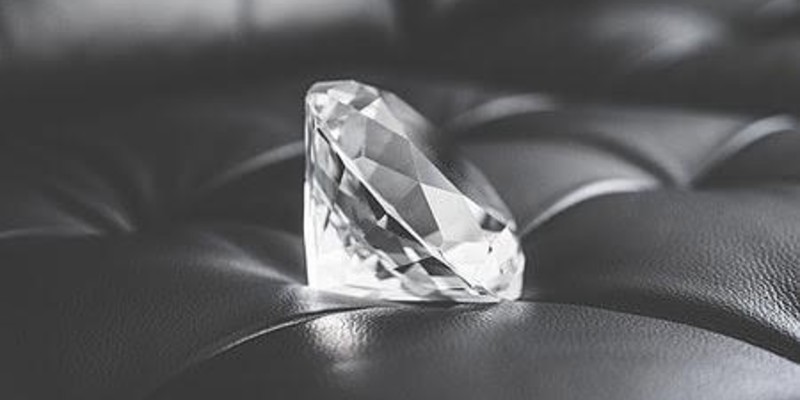
How to Check Diamond Purity in Bengaluru: Expert Tips from Sri Ganesh Diamonds & Jewellery, Sadashivanagar
Most people who buy a diamond have no real way to evaluate what they are buying. They rely on how the stone looks, the price the seller quotes, and whatever documentation comes with the piece. That is not always enough. In India, where diamond jewellery purchasing has grown considerably over the past decade and where the range of quality across stores is genuinely wide, understanding how to check diamond purity before or after a purchase is a practical skill with real financial consequences.
Diamond purity, in technical terms, refers to clarity: the degree to which a diamond is free from internal characteristics (inclusions) and surface characteristics (blemishes). But in common usage, diamond purity also encompasses authenticity: confirming that the stone is a real diamond and not a simulant or a lab-grown stone sold without disclosure. Both dimensions of the question matter, and this guide addresses both.
This is a comprehensive breakdown of what diamond purity means, how the grading system works, what tests can be done at home versus what requires professional assessment, how to read a certificate, and what to look for when buying from a diamond jeweller in Bengaluru. The guidance here draws on professional gemological standards and on the experience of working with diamond buyers at Sri Ganesh Diamonds & Jewellery in Sadashivanagar, where these questions come up constantly.
A diamond without a certificate is a diamond whose quality you cannot verify. Before price, before design, before anything else: ask for the certificate. Everything else follows from that document.
What Is Diamond Purity? Understanding the Terminology
The word “purity” when applied to diamonds is used loosely in everyday conversation, but it maps onto a specific technical concept: clarity. Understanding this precisely matters because it determines how you evaluate a stone and what you are actually paying for when you buy a certified diamond.
Clarity: The Core Definition
Every natural diamond forms under extreme heat and pressure deep within the Earth, at depths of roughly 150 to 200 kilometres below the surface. This process takes billions of years and almost never produces a perfectly clean crystal. The vast majority of natural diamonds contain tiny imperfections: mineral crystals trapped inside the stone during formation, fractures created by internal stress, surface marks from the cutting process.
These internal characteristics are called inclusions. External surface characteristics are called blemishes. The clarity grade of a diamond is a measure of the quantity, size, location, nature, and visibility of these characteristics, assessed under 10x magnification by a trained grader. A cleaner stone, one with fewer and smaller inclusions in less prominent positions, receives a higher clarity grade and commands a higher price.
The practical implication: two diamonds of identical carat weight and cut quality can have very different prices purely because of their clarity grades. Understanding where your stone sits on the clarity scale tells you exactly what you are paying for and whether the price you have been quoted is reasonable.
Authenticity: Real vs. Simulant vs. Lab-Grown
Diamond purity, in the broader sense buyers use it, also covers the question of whether the stone is actually a diamond. Three categories are worth distinguishing clearly.
Natural diamonds are formed in the Earth over geological timescales. They are carbon crystals with specific optical, thermal, and physical properties. They are the most valuable category and the one most buyers are purchasing when they buy “diamond jewellery”.
Lab-grown diamonds are chemically and physically identical to natural diamonds, created in controlled laboratory conditions using either High Pressure High Temperature (HPHT) or Chemical Vapour Deposition (CVD) methods. They are real diamonds by every scientific measure. They are, however, significantly less expensive than natural diamonds of the same specifications and must be disclosed as lab-grown by any ethical seller. A lab-grown diamond sold without disclosure as though it were a natural stone is a consumer protection issue.
Diamond simulants are stones that look like diamonds but are neither natural nor lab-grown diamonds. Cubic zirconia (CZ) is the most common. Moissanite is another, harder to detect and more expensive than CZ. Glass and white topaz are lower-end simulants. None of these has the same physical properties as a real diamond. Selling any simulant as a diamond, without clear disclosure, is straightforwardly fraudulent.
When a buyer asks how to check diamond purity, they are often asking about one or both of these dimensions: how clean is this stone, and how certain am I that it is actually a diamond. The sections below address both.
The 4Cs: The Framework for Evaluating Any Diamond
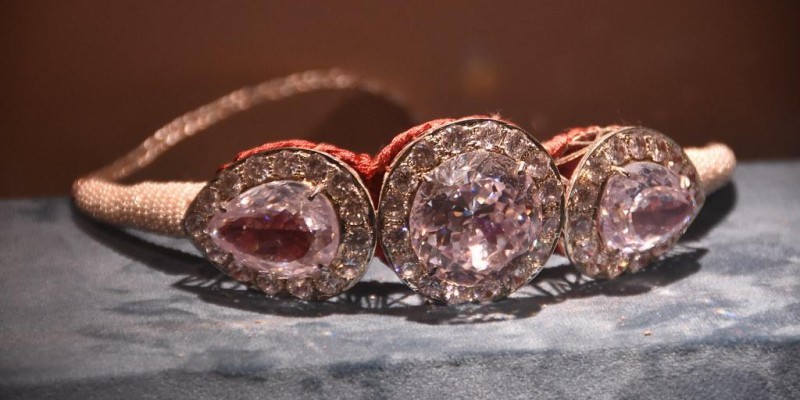
No discussion of diamond purity or quality is complete without understanding the 4Cs, the four parameters that determine a diamond’s quality and ultimately its value. These were codified and standardised by the Gemological Institute of America (GIA) in the mid-20th century and are now the universal language of diamond evaluation used by every legitimate grading laboratory and reputable jeweller worldwide.
Cut: The Quality of the Craftsmanship
Cut refers to how well a diamond has been shaped and faceted from the rough stone. It is widely considered the most important of the four Cs because cut quality determines how effectively the stone interacts with light. A well-cut diamond reflects and refracts light in a way that produces the characteristic brilliance, fire (coloured light dispersion), and scintillation (sparkle during movement) that makes diamonds visually distinctive.
GIA grades cut from Excellent to Poor for round brilliant diamonds. An Excellent cut stone that is slightly lower in colour or clarity will almost always appear more beautiful to the eye than a higher-colour, higher-clarity stone with a Poor cut. Cut is the C that has the greatest visible impact on how the diamond actually looks when worn.
Colour: Measuring Whiteness
Natural diamonds are graded on a colour scale from D (completely colourless) to Z (light yellow or brown). D, E, and F are colourless diamonds and command the highest prices. G through J are near-colourless and represent the most popular range for fine jewellery, offering minimal visible colour difference at considerably lower cost than D-F stones. K onwards shows increasing warmth or tint that is visible to the naked eye.
For yellow gold jewellery settings, near-colourless diamonds (G-J range) are often the practical choice. The warm tone of the gold setting means the difference between a D and a G stone is imperceptible in the finished piece. For white gold or platinum settings, a higher colour grade becomes more relevant because the cool metal makes any warmth in the stone more visible.
Clarity: Purity Under the Lens
Clarity is what most people mean when they ask about diamond purity. The GIA clarity scale has six categories and eleven grades: Flawless (FL), Internally Flawless (IF), Very Very Slightly Included (VVS1 and VVS2), Very Slightly Included (VS1 and VS2), Slightly Included (SI1 and SI2), and Included (I1, I2, I3).
The critical practical point: most inclusions in VS1, VS2, SI1, and SI2 diamonds are not visible to the naked eye. A VS2 diamond viewed without magnification appears perfectly clean to most buyers. An SI1 stone may also appear eye-clean depending on the type and position of its inclusions. The difference between an FL diamond and a VS2 diamond is visible to a trained gemologist under 10x magnification but is often invisible in everyday wear.
This has a significant implication for value. The price difference between an FL diamond and a VS2 diamond of identical cut, colour, and carat can be substantial, even though the visual appearance in a ring or pendant may be indistinguishable. Many experienced buyers deliberately purchase VS2 or SI1 stones because they are eye-clean and offer far better value per carat.
Carat: Weight, Not Size
Carat is the unit of weight for diamonds. One carat equals 0.20 grams, or 200 milligrams. Larger diamonds are rarer and exponentially more expensive per carat than smaller ones. A 1.00 carat diamond does not cost twice as much as a 0.50 carat diamond of the same quality. It costs considerably more, because the rarity of larger rough crystals increases the price non-linearly.
Carat weight does not directly translate to visual size. A 1.00 carat round brilliant diamond has an average diameter of approximately 6.5 mm when well-cut. A deeply cut 1.00 carat stone might appear visually smaller than a shallow-cut stone of the same weight, because more of the weight is hidden in the depth of the stone. This is another reason why cut quality matters: it affects how large the carat weight appears on the finger.
The GIA Diamond Clarity Scale: A Complete Reference
Here is the full GIA clarity grading scale with practical notes on what each grade means for a buyer in Bengaluru:
| Grade | Category | What It Means | Best For |
|---|---|---|---|
| FL | Flawless | No inclusions or blemishes under 10x magnification. Extremely rare. | Collectors, investment buyers |
| IF | Internally Flawless | No internal inclusions; minor surface blemishes only. Very rare. | High-budget statement pieces |
| VVS1 | Very Very Slightly Included | Inclusions extremely difficult to detect even for expert under 10x. | Premium jewellery buyers |
| VVS2 | Very Very Slightly Included | Inclusions very difficult to detect under 10x magnification. | Premium to upper-mid range |
| VS1 | Very Slightly Included | Minor inclusions observed with effort under 10x. Eye-clean. | Engagement rings, bridal sets |
| VS2 | Very Slightly Included | Inclusions slightly more visible under 10x. Still eye-clean. | Best value for quality buyers |
| SI1 | Slightly Included | Inclusions noticeable under 10x. Usually eye-clean. | Value-focused buyers |
| SI2 | Slightly Included | Inclusions visible under 10x; may be visible to naked eye. | Budget-conscious buyers |
| I1 | Included | Inclusions obvious under 10x; likely visible naked eye. | Fashion / costume jewellery |
| I2/I3 | Included | Inclusions obvious; may affect brilliance and durability. | Not recommended for fine jewellery |
For most diamond jewellery purchases in Bengaluru, including engagement rings, pendants, and earrings, the VS1 to SI1 range represents the practical sweet spot. These grades are eye-clean, their inclusions are not visible without magnification in everyday wear, and they offer considerably better value than FL or IF grades without any visible compromise in beauty.
How to Check Diamond Purity: The Methods Ranked by Reliability
The methods available to check diamond purity range from quick home tests to professional laboratory examination. They are not equally reliable. Here is an honest assessment of each.
Method 1: Check the Certificate (Most Reliable, Always First)
The single most reliable way to check diamond purity is to verify the grading certificate that should accompany any significant diamond purchase. A certificate from GIA (Gemological Institute of America) or IGI (International Gemological Institute) provides a third-party, instrument-verified assessment of all four Cs, along with a clarity plot showing the exact location and nature of inclusions.
GIA is widely regarded as the most rigorous grading standard in the world. IGI is the world’s largest gem grading laboratory by volume, with offices in Mumbai, Delhi, and several other Indian cities, making it highly accessible for Indian buyers and jewellers. Both laboratories are credible for fine jewellery purposes. For natural diamonds, GIA grading is considered the gold standard. For lab-grown diamonds, IGI is particularly well-regarded and issues a separate yellow-bordered report specifically identifying the stone as lab-grown.
Every certificate from GIA and IGI includes a unique report number. This number can be verified directly on the GIA Report Check portal (gia.edu) or the IGI verification page (igi.org) in under a minute. The verification will show you the exact grades recorded for that specific stone. If the certificate shown to you does not match the online record, that is a serious red flag.
Important: Many certified diamonds also have their GIA or IGI report number laser-inscribed on the girdle of the stone, which is the thin band around the stone’s widest point. This inscription is visible under 10x magnification and allows a jeweller to verify that the certificate being presented corresponds to the actual stone in the jewellery. At Sri Ganesh Diamonds & Jewellery, every diamond piece comes with its grading certificate, and the team can show buyers how to verify the report number both on the stone and online.
Method 2: Loupe Inspection (Reliable for Trained Eyes)
A jeweller’s loupe is a small handheld magnification tool, typically 10x magnification, which is the standard used for clarity grading. Under a loupe, a trained eye can identify inclusions, examine facet sharpness, and look for characteristics that distinguish real diamonds from simulants.
For buyers without gemological training, a loupe is still useful for one specific purpose: looking at whether a stone has inclusions at all. Real natural diamonds almost always have some kind of inclusion visible under 10x magnification, even if it is tiny. A stone that appears completely perfect under a loupe is either a very high-grade natural diamond (rare and expensive) or potentially a simulant. Glass and cubic zirconia tend to look artificially clean under magnification because they are manufactured rather than grown.
Loupe inspection is available at any jewellery store on request. When visiting a jewellery store in Bengaluru, asking to look at a diamond under the loupe is entirely normal and a mark of a serious buyer. No reputable jeweller will refuse this.
Method 3: The Fog Test (Quick Indicator, Not Conclusive)
Hold the stone close to your mouth and breathe on it, creating a light fog from moisture and warm air. Observe how quickly the fog clears. A real diamond disperses heat extremely efficiently, which means the condensation should clear almost immediately, within one to two seconds. A simulant like cubic zirconia retains heat differently and the fog will linger for three to five seconds or longer.
This test is useful as a quick first indicator. It is not definitive. GIA notes that the fog test can be affected by ambient humidity, temperature, and how the stone is mounted. It should never be used as the sole test for authenticity. Use it as a preliminary check, not a conclusion.
Method 4: The Water Float Test (Limited Usefulness)
A real diamond is significantly denser than water, with a specific gravity of approximately 3.5. Drop the loose stone into a glass of still water. A real diamond sinks quickly and rests on the bottom. Some simulants are lighter and may float or settle more slowly.
The limitation: cubic zirconia is also quite dense (specific gravity approximately 5.6) and sinks in water. So does moissanite. This test is mainly useful for detecting glass or very light simulants. It does not distinguish between diamonds and higher-quality simulants. For stones in a setting, the test cannot be done at all.
Method 5: UV Fluorescence Test (Useful Context, Not Definitive)
Under ultraviolet (UV) light, approximately 25 to 35 percent of natural diamonds fluoresce blue. This is a natural optical phenomenon caused by certain structural characteristics. If a stone glows strongly blue under UV, it is likely a diamond. However, the absence of fluorescence does not mean the stone is fake: the majority of very fine diamonds show no fluorescence or very faint fluorescence. Some simulants also show fluorescence under UV.
UV testing is useful as one data point among several but should never be used in isolation. A UV lamp is inexpensive and available online, which makes this test accessible for home use.
Method 6: Professional Diamond Tester (Accurate for Real vs. Simulant)
Professional diamond testers measure thermal conductivity to distinguish diamonds from most simulants. Real diamonds disperse heat extremely quickly due to their crystalline carbon structure. Most simulants do not. A basic thermal conductivity tester will correctly identify a real diamond with high reliability.
The one caveat: moissanite, a synthetic silicon carbide simulant that is harder to detect, shows very similar thermal conductivity to diamond on basic testers. More advanced testers that also measure electrical conductivity can distinguish between diamond and moissanite, because moissanite is electrically conductive while diamonds are not (with the exception of some rare Type IIb natural diamonds). Any professional jeweller or gemmologist will have access to this equipment. The best diamond jewellers in Bangalore and other cities use combined testers that check both thermal and electrical conductivity as standard practice.
How to Read a Diamond Certificate: A Step-by-Step Guide
A GIA or IGI certificate is the definitive document for checking diamond purity. Understanding how to read one is a practical skill that protects you in every diamond purchase.
Section 1: Report Number and Verification
The report number appears at the top of the certificate. This is the unique identifier for your specific stone. Go to gia.edu and click “Report Check”, or go to igi.org and use their verification tool. Enter the report number. The online record will show you all the grades for the stone. Confirm that every detail on the paper certificate matches the online record exactly. Any discrepancy, even a single grade difference, should be investigated before purchase.
Section 2: Shape and Cutting Style
This section identifies the shape of the stone (Round Brilliant, Princess, Oval, Cushion, Emerald, etc.) and the cutting style (typically “Brilliant” or “Step cut”). Confirm that the shape and style on the certificate match the actual stone being presented to you.
Section 3: Measurements and Carat Weight
The measurements section gives the stone’s dimensions in millimetres. For a round brilliant, this is listed as minimum diameter, maximum diameter, and depth (e.g., 6.21 to 6.24 x 3.88). The carat weight is listed separately and expressed to two decimal places. Confirm that these measurements are consistent with the actual stone. A jeweller can measure the stone with a digital gauge in under a minute if you want verification.
Section 4: The 4Cs Grades
This is the core of the certificate. Cut grade, colour grade, clarity grade, and carat weight are listed clearly. For GIA certificates, cut grades for round brilliants run from Excellent to Poor. Colour grades run from D (colourless) to Z. Clarity grades run from FL to I3. Take time to understand where your stone falls on each scale using the reference in the previous section.
Section 5: The Clarity Plot
GIA and IGI certificates include a clarity plot: a diagram of the stone showing the location and type of each inclusion and blemish, marked in red (internal) and green (external). This plot is specific to your stone. No two diamonds have identical inclusion patterns, which means the clarity plot is effectively a fingerprint for the stone. It lets you confirm that the stone being presented matches the certificate precisely, particularly useful if a stone has been re-set or if you are buying from a secondary source.
Section 6: Additional Grading Information
Certificates also note polish and symmetry grades (both usually Excellent or Very Good for quality stones), fluorescence intensity and colour, and any comments about clarity characteristics not shown on the plot. Fluorescence noted as “None” or “Faint” is standard for fine diamonds. Strong fluorescence can sometimes cause a diamond to look slightly hazy in direct sunlight, which is worth knowing before purchase.
Natural Diamond vs. Lab-Grown Diamond vs. Simulant: Key Differences
One of the most important distinctions a buyer in Bengaluru needs to understand in 2025 and 2026 is the difference between natural diamonds, lab-grown diamonds, and simulants. The market for all three is active and the price differences are significant.
| Factor | Natural Diamond | Lab-Grown Diamond / Simulant |
|---|---|---|
| Formation | Earth formed over billions of years | Lab-grown: made in weeks. Simulants: manufactured stones (CZ, Moissanite) |
| Chemical structure | Pure carbon crystal | Lab-grown: identical carbon crystal. Simulants: different composition entirely |
| GIA / IGI certification | Certified as a Natural Diamond | Lab-grown certified as Lab-Grown. Simulants not certifiable as diamonds |
| Price point | Highest, reflects rarity | Lab-grown: 30-70% lower. Simulants: very low |
| Resale value | Holds value well over time | Lab-grown: lower resale. Simulants: minimal resale |
| Detectable difference | Advanced equipment only (natural vs lab-grown) | Simulants detectable with thermal + electrical tester |
| Disclosure requirement | N/A (natural is standard) | Ethical sellers must disclose both lab-grown origin and simulant status |
The key practical point from this table: natural diamonds and lab-grown diamonds look identical to the naked eye and under a standard loupe. Only advanced equipment, specifically spectroscopic analysis, can definitively distinguish them. This is why certificate disclosure matters so much. A reputable seller will tell you clearly whether you are buying a natural or lab-grown stone.
Sri Ganesh Diamonds & Jewellery sells certified natural diamonds and provides GIA or IGI certificates as standard with all diamond pieces. The store does not sell simulants as diamonds or lab-grown stones without disclosure. All pieces carry proper certification.
Common Types of Diamond Inclusions: What You Might See Under Magnification
Understanding inclusion types helps you read a clarity plot accurately and assess whether an inclusion is benign or potentially problematic. Here are the most common types.
Pinpoints and Clouds
Pinpoints are tiny crystal inclusions that appear as minute white or black dots under magnification. They are the most common type of inclusion in diamonds and in small numbers have minimal impact on clarity grade or brilliance. A cloud is a cluster of multiple pinpoints close together. In small clusters, clouds are essentially harmless. Dense clouds can reduce the transparency of a stone and have a more significant impact on clarity.
Crystals and Needles
Crystals are mineral inclusions trapped inside the diamond during formation. They are the evidence of the geological environment in which the diamond grew. Needles are elongated crystal inclusions with a needle-like shape. Both are common in natural diamonds and are part of what makes each stone unique. Their impact on clarity depends on their size, position, and visibility under magnification.
Naturals and Graining
A natural is an unpolished portion of the original rough diamond surface left on the finished stone, usually on or near the girdle. They are not inclusions in the strict sense but are noted on clarity reports. Internal graining refers to irregular crystal growth patterns that can appear as faint lines or haze within the stone. Moderate graining has limited visual impact in everyday wear.
Cavities and Chips
A cavity is a surface feature created when a crystal inclusion is lost during polishing, leaving a small void. A chip is a shallow break at the surface, usually at the girdle or on a facet edge. Both are surface blemishes rather than internal inclusions. Small cavities and chips can sometimes accumulate dirt over time. More significant chips affect the structural integrity of the stone and are worth knowing about before purchase.
Buying Diamond Jewellery in Bengaluru: What to Ask and Check
Armed with the technical knowledge above, here is the practical checklist for buying a diamond from any jewellery store in Bengaluru.
Ask for the Certificate Before Agreeing to Price
The certificate is the price anchor. Without it, you cannot evaluate whether the price quoted is fair for the clarity, colour, cut, and carat weight of the stone. A jeweller who quotes a price without producing a certificate is asking you to trust their word rather than a verified document. Ask for the GIA or IGI certificate first. If one is not available, ask why and reconsider the purchase.
Verify the Certificate Online
Take thirty seconds and verify the certificate number on gia.edu or igi.org on your phone before finalising the purchase. Confirm that the grades shown on the paper certificate match the online record exactly. This single check has caught discrepancies that protect buyers from significant financial loss.
Check for Laser Inscription
Ask the jeweller to show you the laser inscription on the girdle of the stone. A 10x loupe is all that is needed. The inscription will show the report number matching the certificate. If the inscription number does not match the certificate, the stone has been switched. This is rare with reputable jewellers but is a meaningful verification step for significant purchases.
Ask Specifically Whether the Stone Is Natural or Lab-Grown
With the proliferation of lab-grown diamonds in the Indian market over the past three years, this is now a necessary direct question. Ask explicitly: “Is this a natural diamond or a lab-grown diamond?” A reputable jeweller will answer clearly and the certificate will confirm the answer. Lab-grown diamonds are not inferior products, but they are priced differently and their resale characteristics are different from natural stones. You deserve to know which you are buying.
Assess the Setting Quality Alongside the Stone
A well-graded diamond can be compromised by a poor setting. Check that prongs are even, secure, and positioned correctly. A prong that covers too much of the stone reduces light entry and diminishes brilliance. A loose prong risks the stone eventually falling out of the setting. At Sri Ganesh Diamonds & Jewellery, the setting craftsmanship on all diamond pieces is verified before the piece goes on display. The team will demonstrate the security of any setting before purchase.
Frequently Asked Questions
What is the most accurate way to check diamond purity?
Verifying a GIA or IGI grading certificate is the most accurate method available to a buyer. The certificate records the clarity grade, cut, colour, and carat weight assessed by a trained gemologist using professional equipment and calibrated standards. Online verification of the certificate number on gia.edu or igi.org confirms that the certificate is genuine and matches the specific stone.
What clarity grade should I look for when buying a diamond in Bengaluru?
For most buyers, VS1 to SI1 is the practical range that offers the best combination of visual quality and value. Diamonds in this range are typically eye-clean: their inclusions are not visible without magnification. The price difference between a VS2 and an FL diamond is often very significant, while the visual difference in everyday wear is imperceptible. Unless you are buying for a specific investment purpose, spending at the FL or IF end of the scale is rarely necessary for most jewellery contexts.
How do I know if a diamond is real or a simulant at home?
The fog test and UV fluorescence test provide preliminary indicators. The most reliable home test is the water float test combined with a close visual inspection for the kind of optical properties (depth of sparkle, light refraction patterns) that differ between a real diamond and glass or cubic zirconia. However, moissanite and some high-quality simulants can pass multiple home tests. For certainty, bring the stone to a professional jeweller who has a combined thermal and electrical conductivity tester. This equipment definitively distinguishes diamonds from all common simulants.
What is the difference between GIA and IGI certification?
Both are legitimate, internationally recognised grading laboratories. GIA (Gemological Institute of America) is widely regarded as the most rigorous and consistent grading standard in the world and is the benchmark for natural diamond grading globally. IGI (International Gemological Institute) is the world’s largest grading laboratory by volume, with significant presence in India, and is particularly well-regarded for lab-grown diamond certification. For natural diamonds, GIA certification commands slightly higher market confidence. For lab-grown diamonds, IGI reports are equally credible and widely accepted in the Indian market.
Can diamond purity change over time?
No. The clarity characteristics of a diamond are fixed at the point of formation. Inclusions do not develop or worsen over time under normal conditions of wear. What can change is the diamond’s surface condition: scratches and chips can accumulate from impact or improper storage. These are surface blemishes rather than changes in clarity grade. Storing diamonds separately from other jewellery and avoiding hard impact protects the surface. The underlying clarity of the stone remains constant.
Where can I buy certified diamond jewellery in Bengaluru?
Sri Ganesh Diamonds & Jewellery at 25, Sankey Road, 2nd Main Road, near Citibank ATM, Sadashivanagar, Bengaluru 560080 provides GIA or IGI grading certificates with all diamond jewellery as standard. The team can walk you through the certificate, verify it online with you, and show you the laser inscription on the girdle if applicable. Call +91 9535865482 or +91 9740255109 to schedule a consultation, particularly useful if you are looking for a specific clarity grade, carat weight, or custom diamond piece.
Final Thoughts
Learning how to check diamond purity is a practical skill that repays the time invested many times over. The diamond market in India is large, active, and not uniformly transparent. Buyers who understand the 4Cs, can read a grading certificate, know how to verify it online, and ask the right questions when purchasing are significantly better protected than buyers who rely entirely on the seller’s representation.
The summary: clarity (purity) is one of four parameters that determine a diamond’s quality and value. GIA and IGI certificates provide the most reliable third-party verification of all four. Home tests can help identify obvious fakes but cannot replace professional assessment for high-value purchases. The VS1 to SI1 clarity range offers the best practical value for most buyers. And a certificate that cannot be verified online is a certificate that should be questioned.
At Sri Ganesh Diamonds & Jewellery in Sadashivanagar, these standards are the baseline. Every diamond piece comes certified. The team is familiar with buyers who want to understand exactly what they are purchasing, because those buyers tend to make the best long-term decisions and return when they are ready to buy again. Walk in, ask for the certificate, verify it on your phone, and buy with confidence.
A diamond’s beauty is visible to anyone. Its purity is provable. The certificate is what converts a visual impression into a verified fact. Never buy a significant diamond without one.
Leave a reply